
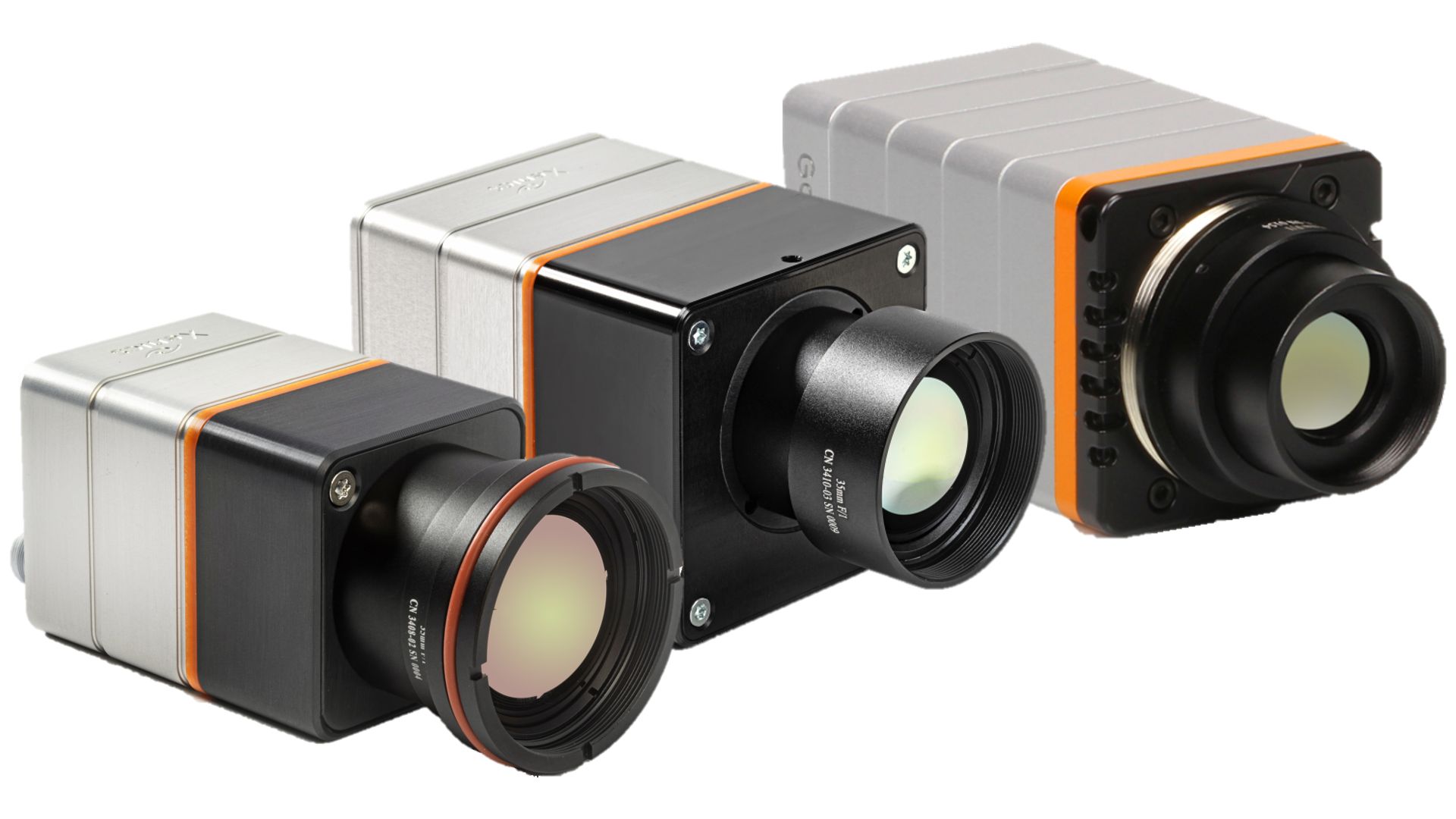
The Exosens / Xenics long-wave infrared (LWIR, 8–14 µm) product line comprises a family of uncooled microbolometer-based cameras and cores designed for seamless integration into industrial, scientific, and electro-optical systems.
At the core of the modern platform is a 12 µm pixel pitch vanadium oxide (VOx) microbolometer architecture, delivering high sensitivity (NETD < 50 mK), compact form factor, and low power consumption.
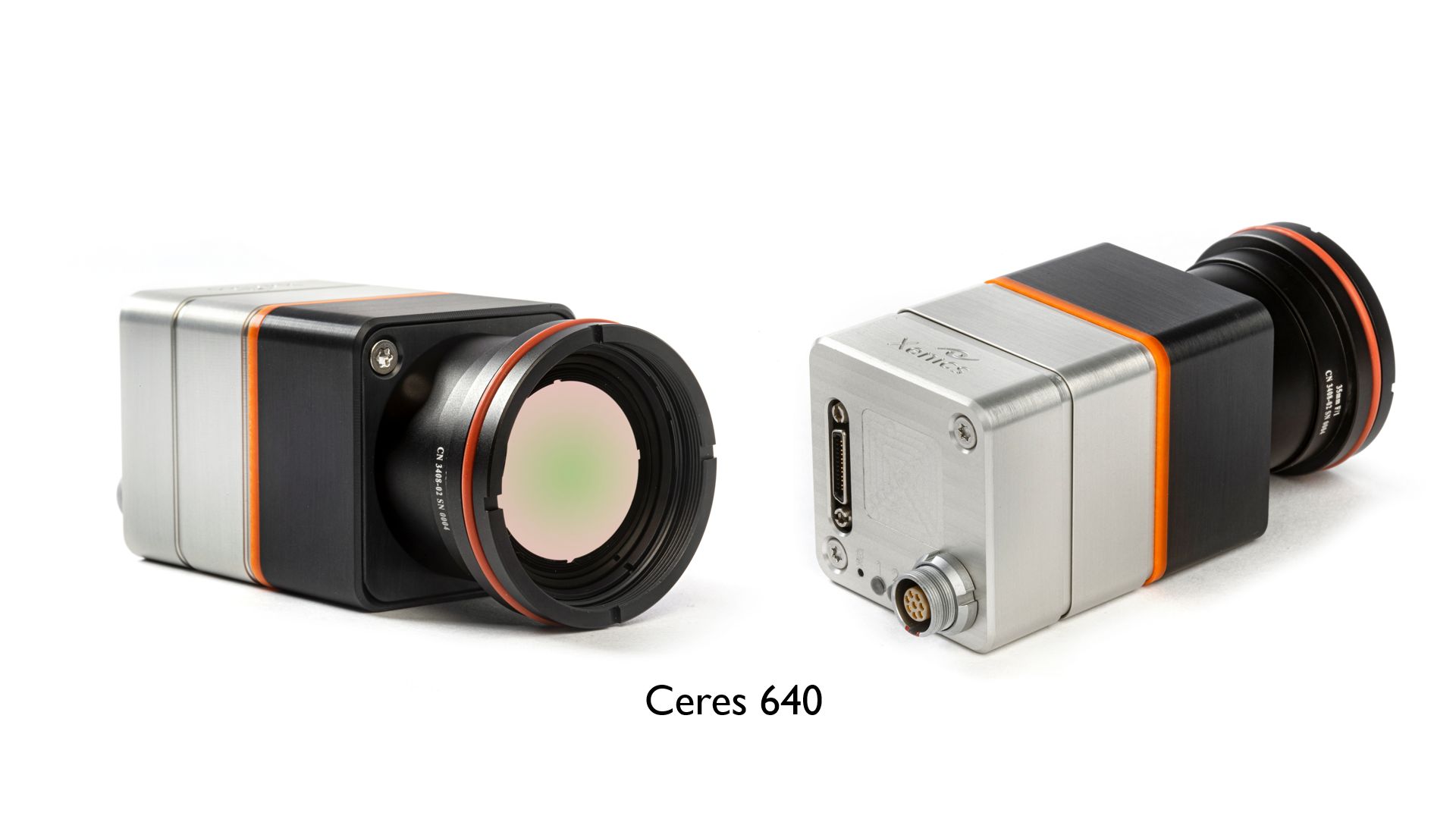
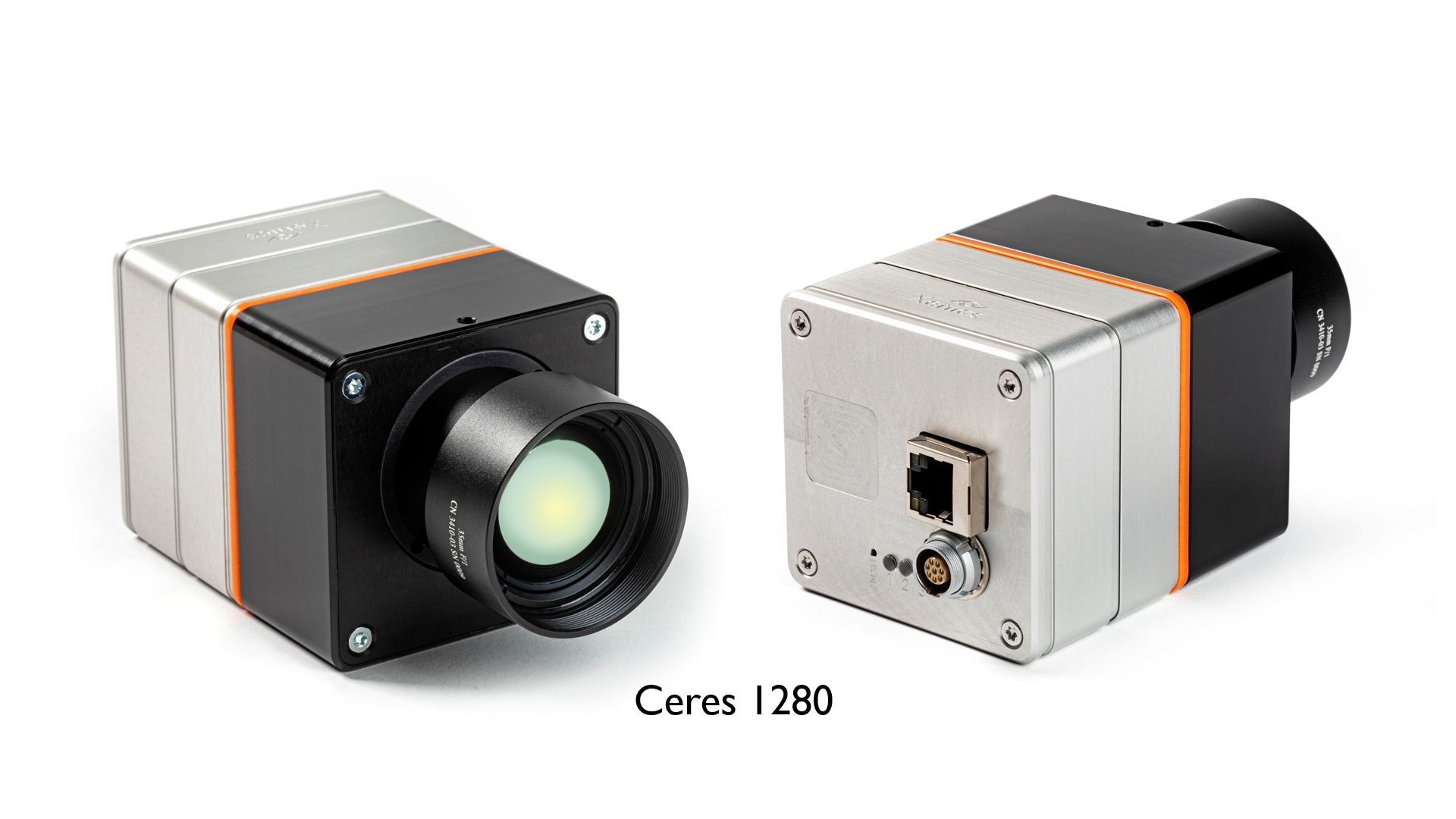
The product line is structured around a core-to-camera architecture, where the latest fully integrated cameras (Ceres series) are built directly on the Dione thermal core platform, enabling consistent performance, scalable integration, and flexible system design. If you need a ready-to-use camera for LWIR imaging or thermography, then the Ceres V (for LWIR imaging) or a Ceres T (for thermography) camera would be the logical choice. Within the Ceres V or Ceres T category, one may choose between a 640 x 480 or 1280 x 1024 cameras, and one may select a GigE or CameraLink host interface. Once the camera is selected, users would typically add certain accessories, e.g. a compatible LWIR lens, interface cable, etc. Please contact Scientific Imaging for assistance with this selection process .
System Configuration Considerations
A complete LWIR imaging system typically includes:
- LWIR optics (germanium or chalcogenide lenses matched to detector format)
- Interface hardware (GigE / Camera Link / embedded processing)
- Software tools (image processing, radiometric analysis, data acquisition)
Camera selection is driven by:
- Thermal imaging vs thermography requirements
- Spatial resolution and field-of-view
- Integration constraints (SWaP, interface)
- Measurement accuracy vs visualization needs
The following is a brief description of the different camera series: please review the “Specifications” tab for details regarding the maximum frame rates, QE, full-well-capacity and NETD specifications as well as the different host-interfaces supported within each series.
Ceres Series (Ceres V / Ceres T) — Integrated LWIR Cameras
The Xenics Ceres family represents the latest generation of fully integrated LWIR cameras, combining detector, electronics, and image processing into a compact industrial package.
These cameras are built on the Dione OEM thermal imaging core, ensuring a consistent foundation of performance and integration capability.
Key Characteristics
- Detector technology: 12 µm VOx microbolometer
- Spectral range: 8 – 14 µm
- Resolutions:
- 640 × 480 (VGA)
- 1280 × 1024 (SXGA)
- Interfaces: GigE Vision or Camera Link (GenICam compliant)
- Frame rates: up to 60 Hz full frame
- On-board processing: advanced image enhancement and correction
- Integration: compact, industrial form factor with flexible optical mounts
Ceres cameras are designed for straightforward integration into demanding systems, offering synchronized operation (PTP), robust interfacing, and high image quality.
Ceres V — Thermal Imaging (Vision)
The Xenics Ceres V is optimized for high-quality thermal imaging applications where visualization and detection are primary.
- Industrial machine vision
- Process monitoring
- Security and surveillance
- Scientific imaging
Built on the Dione core, the Ceres V series delivers superior image quality with real-time performance, supported by on-board image processing and low-latency data output.
Ceres T — Thermography (Measurement)
The Xenics Ceres T is designed for quantitative thermographic measurement, providing:
- Stable and reproducible temperature data
- Radiometric calibration capability
- Advanced correction (NUC, drift compensation)
- Measurement-grade performance
Ceres T thermography cameras are typically specified and ordered as a camera + lens + calibration bundle, rather than as standalone components. This is because radiometric accuracy is fundamentally dependent on the optical path, including lens transmission, vignetting, and spectral characteristics in the 8–14 µm band.
Factory Calibration with Selected Lens
When a Ceres T system is ordered with a specific LWIR lens:
The camera and lens are paired and calibrated together at the factory. Calibration accounts for:
- Lens transmission vs wavelength
- Pixel-wise non-uniformity (NUC)
- Optical shading / vignetting
- System-level thermal drift behavior
This results in a fully characterized radiometric system, ensuring that temperature measurements are accurate across the entire field of view.
Available Calibration Packs
Ceres T cameras are supplied with application-specific calibration ranges, typically selected at the time of order:
–20 °C to +120 °C → optimized for:
- Diagnostics
- Biological / life sciences
- Low-temperature industrial processes
+50 °C to +400 °C → optimized for:
- Electronics and semiconductor inspection
- Materials testing
- High-temperature industrial processes
The Ceres T platform is particularly well suited for:
-
- Failure analysis
- Materials research
- Semiconductor and electronics inspection
- Process control
Dione Series — LWIR Thermal Cores (OEM Integration)
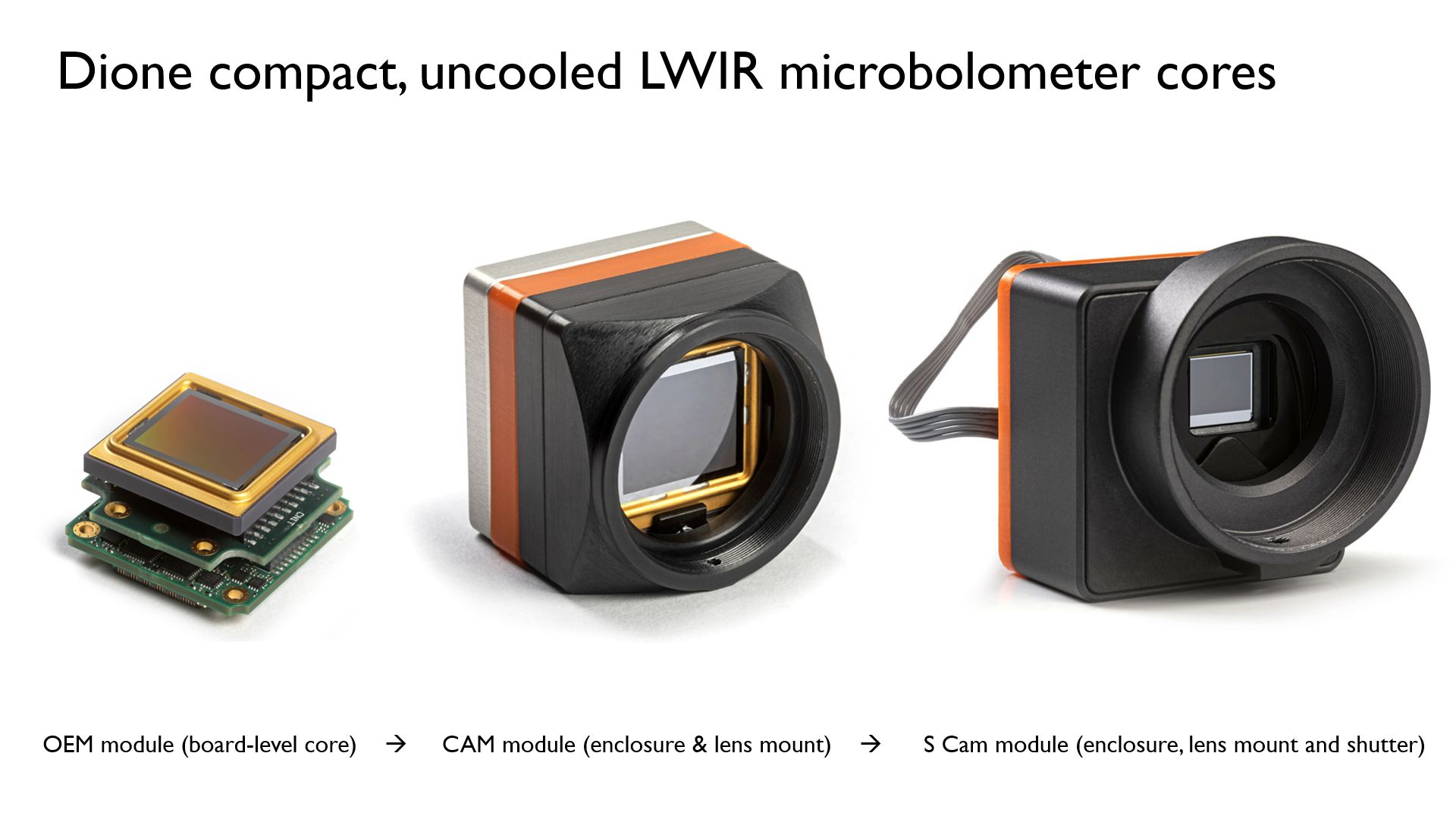
Dione cores – which are the platform on which the Ceres cameras are based – are offered for integration by OEMs and system developers into customized products. The Dione series is optimized for embedded vision, UAVs, handheld systems, and custom instrumentation, where size, weight, and power are critical. The sensors in the Dione family of low-SWaP LWIR cores have a 12um pitch, and they are offered in a choice of 320 x 256, 640 x 480, 1024 x 768 or 1280 x 1024 arrays.
Contact Scientific Imaging, Inc. if you are an OEM or a systems integrator and need more details about these LWIR thermal cores.
Core Architecture
- 12 µm microbolometer detector
- Resolutions: 320 × 240 → 1280 × 1024
- NETD: < 50 mK (down to ~35–40 mK in advanced variants)
- Ultra-compact, low-SWaP design
- Fast startup and low latency imaging
Integration Options:
Within the family, there are three levels of integration offered: this allows OEMs and system integrators to choose their starting point from which to begin their development process
- OEM (board-level core): a bare board stack (no enclosure, no lens mount); external optics and mechanics required. Interface options: MIPI CSI-2, 16-bit digital video
- CAM (housed camera module): with a minimal camera enclosure and a lens mount. Interface options: MIPI CSI-2, 16-bit digital video, USB (UVC)
- S CAM (enhanced integration): with a minimal camera enclosure, a lens mount and with a built-in physical shutter for offset calibration. Interface options: MIPI CSI-2, 16-bit digital video, USB (UVC). While it requires engineering development effort to develop products based on S CAM modules, they require the lowest integration effort and are therefore often used in industrial or defense systems.
Interfaces
- MIPI CSI-2 (embedded systems)
- USB (UVC)
- Digital video output
Gobi Series — Legacy LWIR Platform (a-Si, 17 µm)
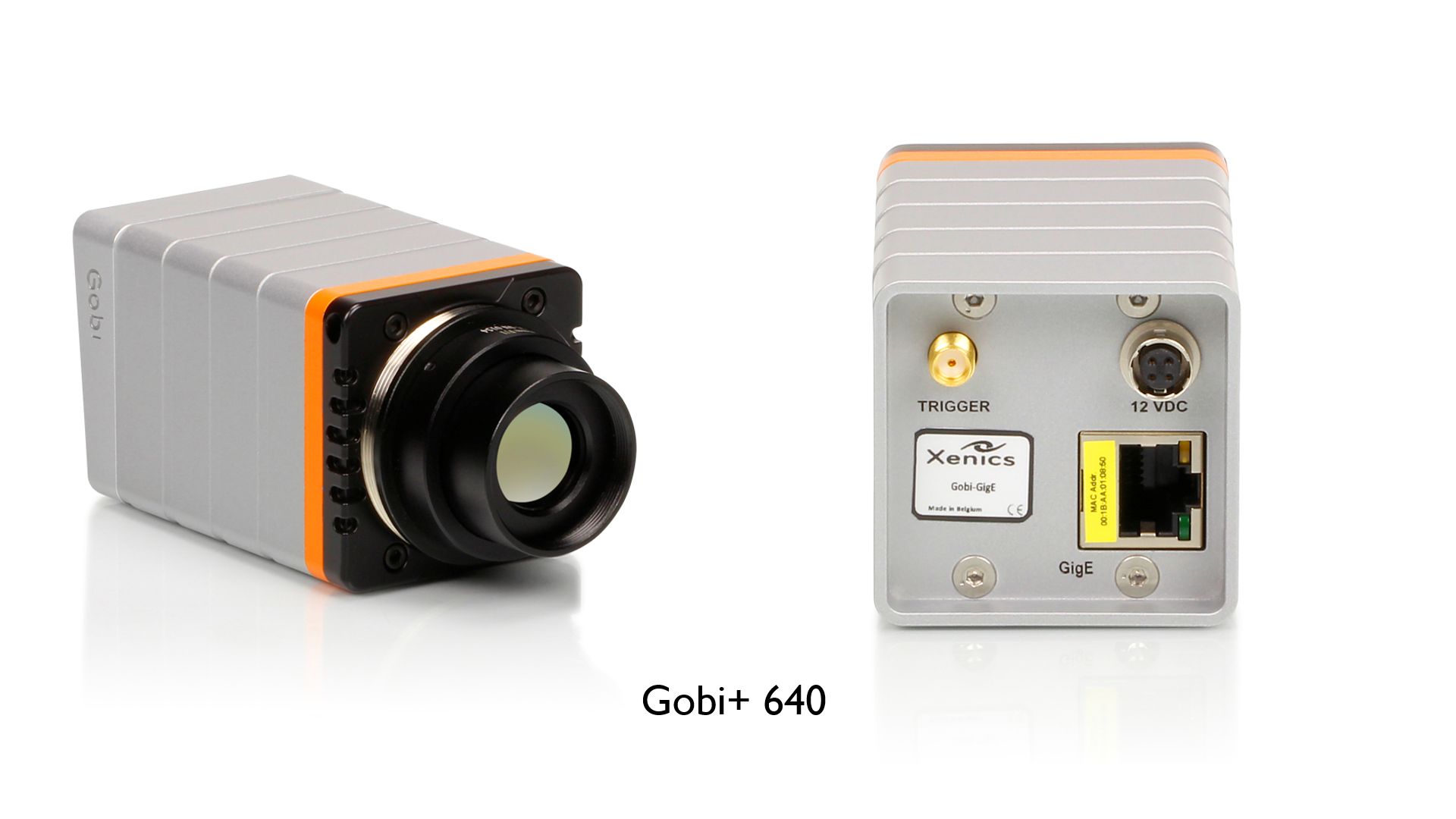
The Xenics Gobi+ 640 represents a very popular earlier generation of LWIR cameras based on amorphous silicon (a-Si) microbolometers with 17 µm pixel pitch.
- Proven and widely deployed architecture
- Lower spatial resolution density compared to 12 µm platforms
- Suitable for legacy systems and cost-sensitive applications
While still available, the Gobi platform is generally superseded by the higher performance and more compact Ceres/Dione architecture. Contact Scientific Imaging, Inc. if you need a quotation, or if you need more information regarding Gobi+ 640 LWIR cameras.
