Product Description
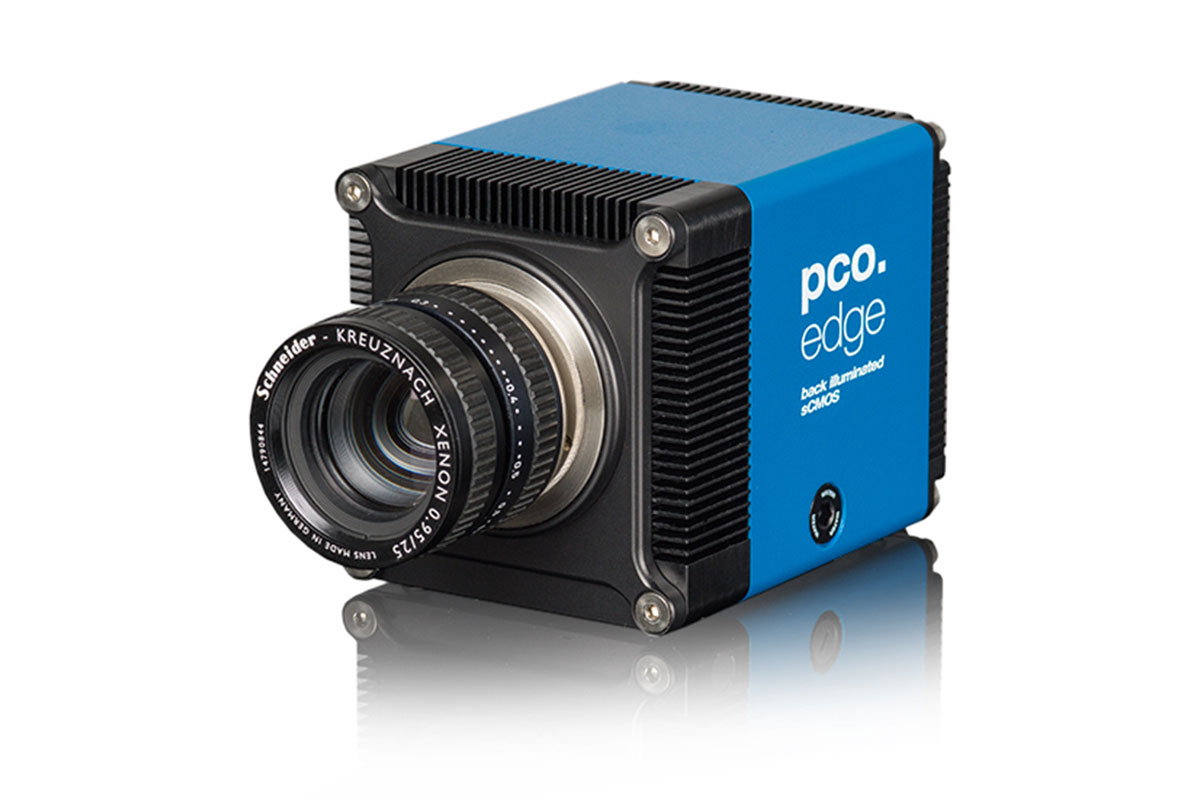
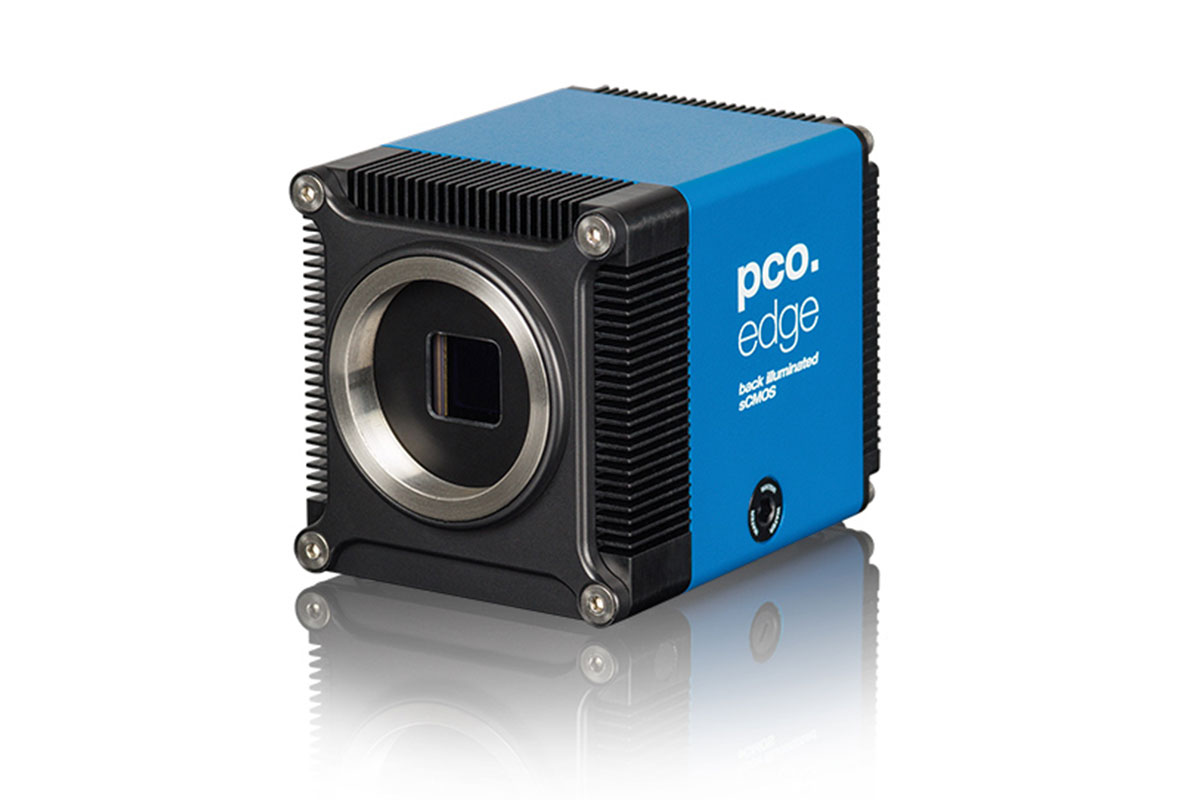
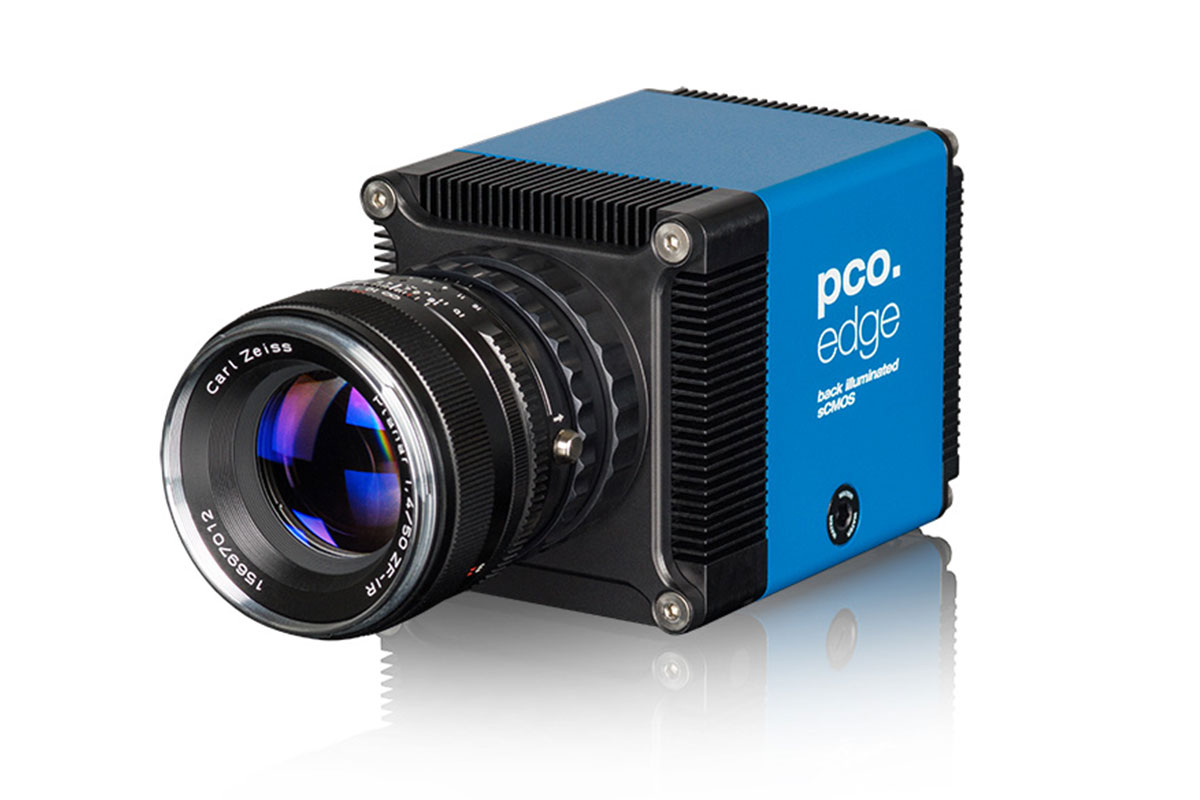
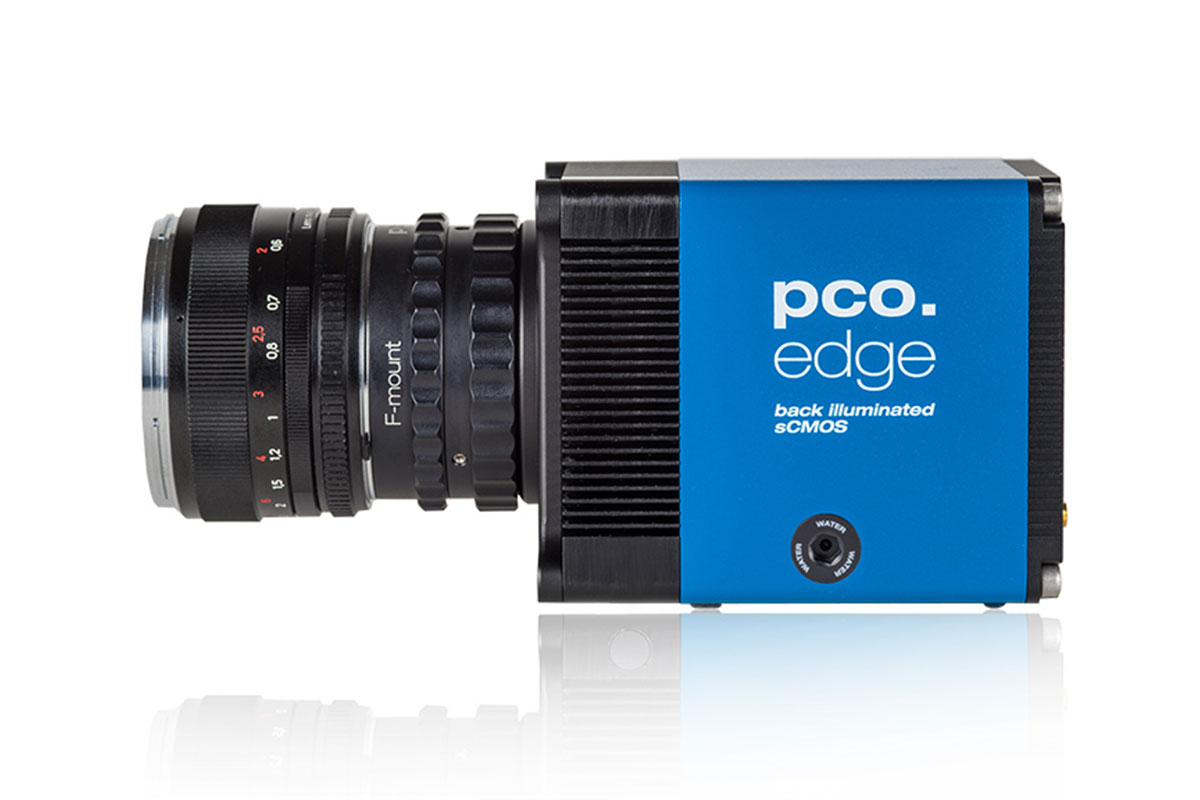
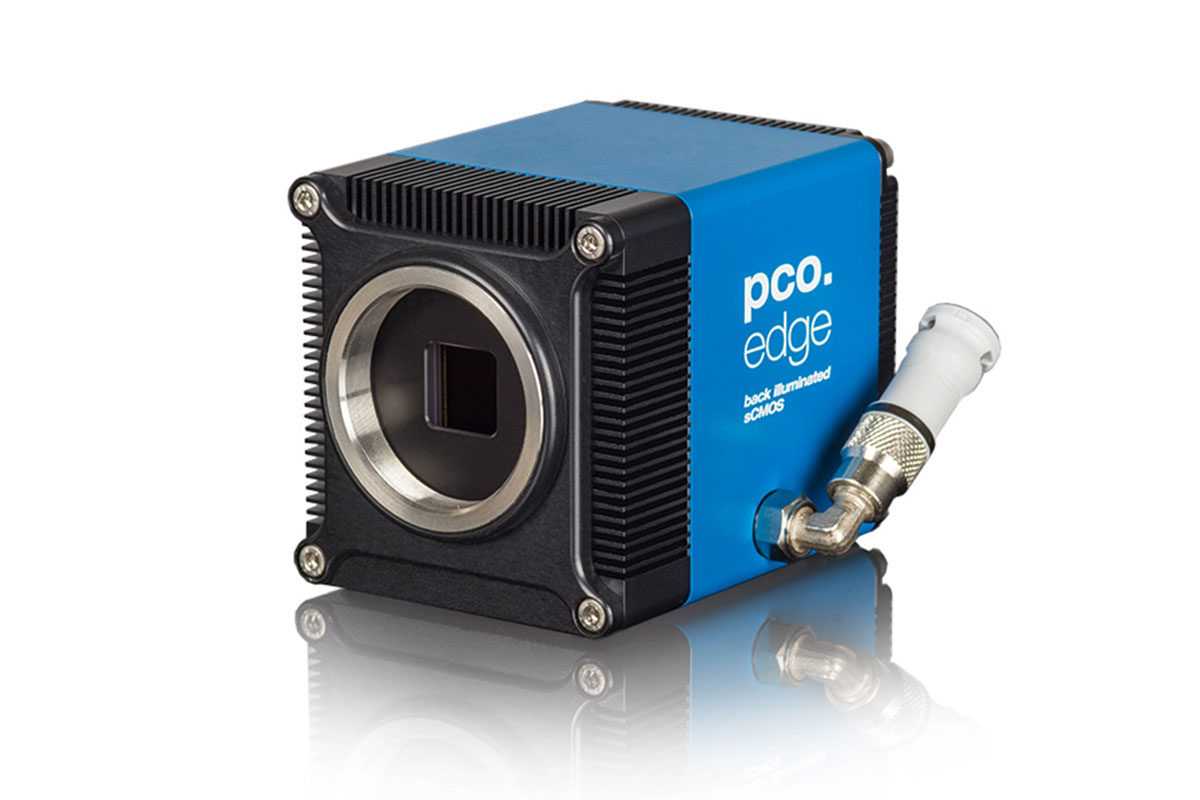
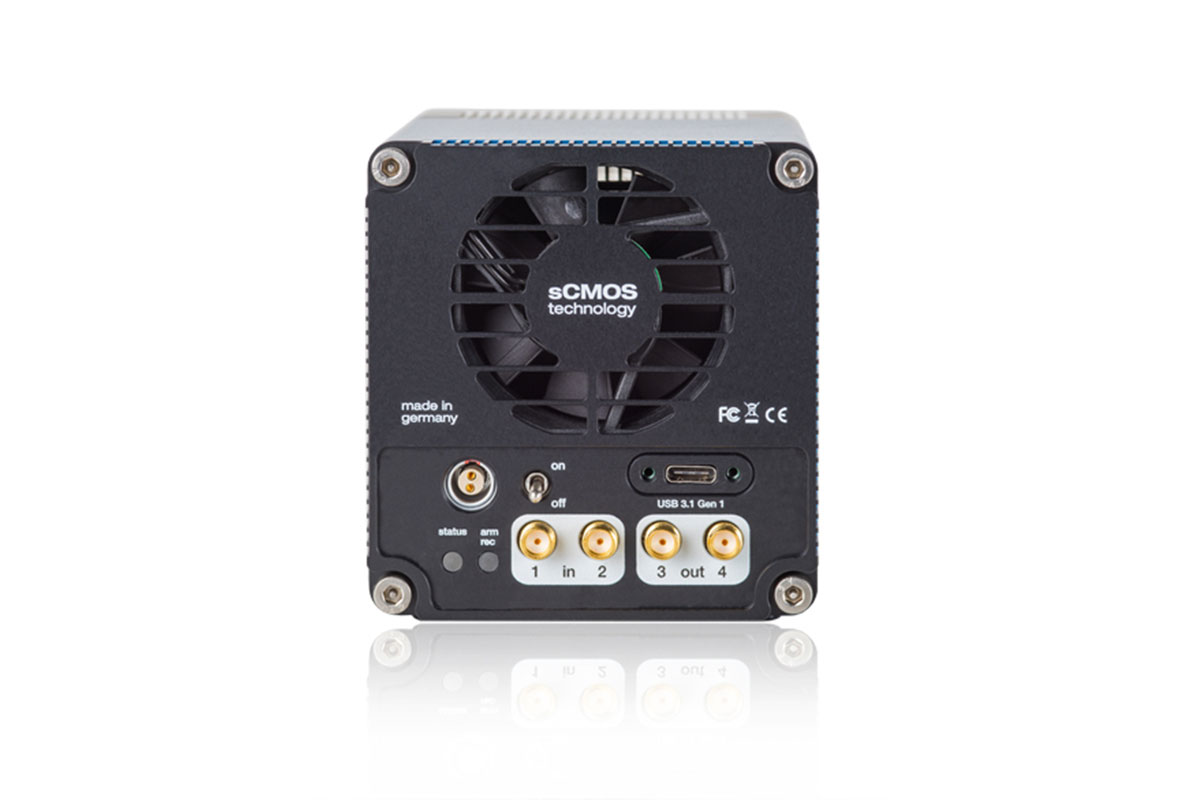
The pco.edge 4.2bi series is based on a back illuminated (bi) sCMOS sensor. This offers a 95% QE performance within the pco.edge line of sCMOS cameras, making the pco.edge 4.2 bi a superb choice for many challenging imaging conditions. The pco.edge 4.2 bi is offered with an USB 3.1 interface, complementing its performance.
The adjustable cooling system in the pco.edge 4.2 bi allows the use of air or water to cool the sensor down to -25 °C. At this temperature, the dark current is reduced to 0.2 e-/pixel/s. TE-cooling is therefore very useful in low-light imaging applications in which long exposures are typically used. For shorter exposures, TE-cooling does not provide a significant benefit. For applications in which exposures are typically shorter than 1s, it is worth considering the pco.panda 4.2 bi which uses the same back-illuminated sensor as this camera, but in a non-cooled configuration.
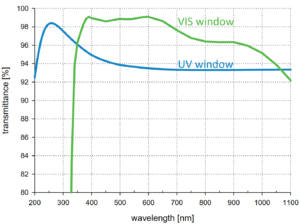
Depending on the spectral needs of the application, scientists may select a pco.edge 4.2 bi camera with an input window that is optimized for either for the UV or VIS range. In the UV version, a specialized input window is installed internal to the camera. With a factory-installed UV window, the pco.edge 4.2 bi UV camera enables imaging with the back illuminated imager in the ultraviolet wavelength range with responsivity down to 190nm.
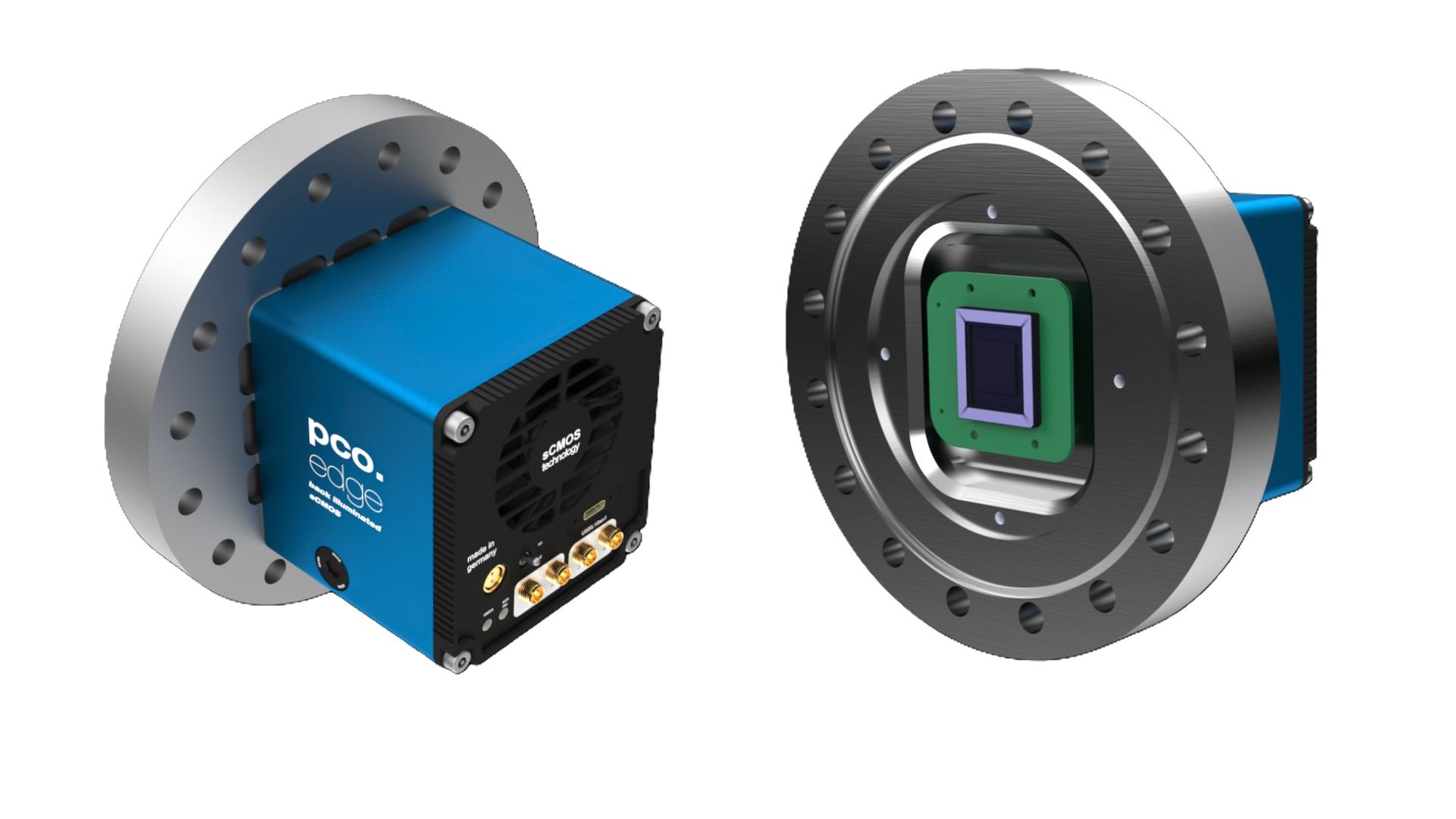
A special pco.edge 4.2 bi XU version is offered for EUV and soft X-ray imaging applications. The “XU” version features an extremely specific coating ideally suited for use in applications in the visible light down to extreme UV (EUV) and soft X-ray radiation. Based on the same sCMOS image sensor with 2048 x 2048 pixel resolution and 6.5 μm pixel size, the pco.edge 4.2 bi XU allows full frame acquisitions at 40 fps with a dynamic range of 88 dB at a noise level of 1.9 e–. The XU version is offered with a CF-100 flange, allowing the camera to be used in vacuum environments down to 1 x 10(-7) mbar.
This camera series supports an HDR mode for wide dynamic range imaging as well as a low light mode which reduces the temporal read-noise by a process of correlated multi sampling (CMS).
The sCMOS image sensor used in this camera has two readout and Analog-to-Digital (A/D) conversion datapaths, shown below as “Top” and “Bottom” readout chains. These pixel values in the two datapaths result from the same exposure.
In the High Dynamic Range (HDR) mode, different analog gains are applied to the Top and Bottom readout chains: the low gain image is optimized for high full well capacity, and the high gain image is optimized for low read noise. The animation below shows the typical HDR mode of operation in which the low-gain and high-gain datapaths are combined. Data from the dimmest content as well as the brightest content are blended in a way to achieve an image with a high intra-scene dynamic Range.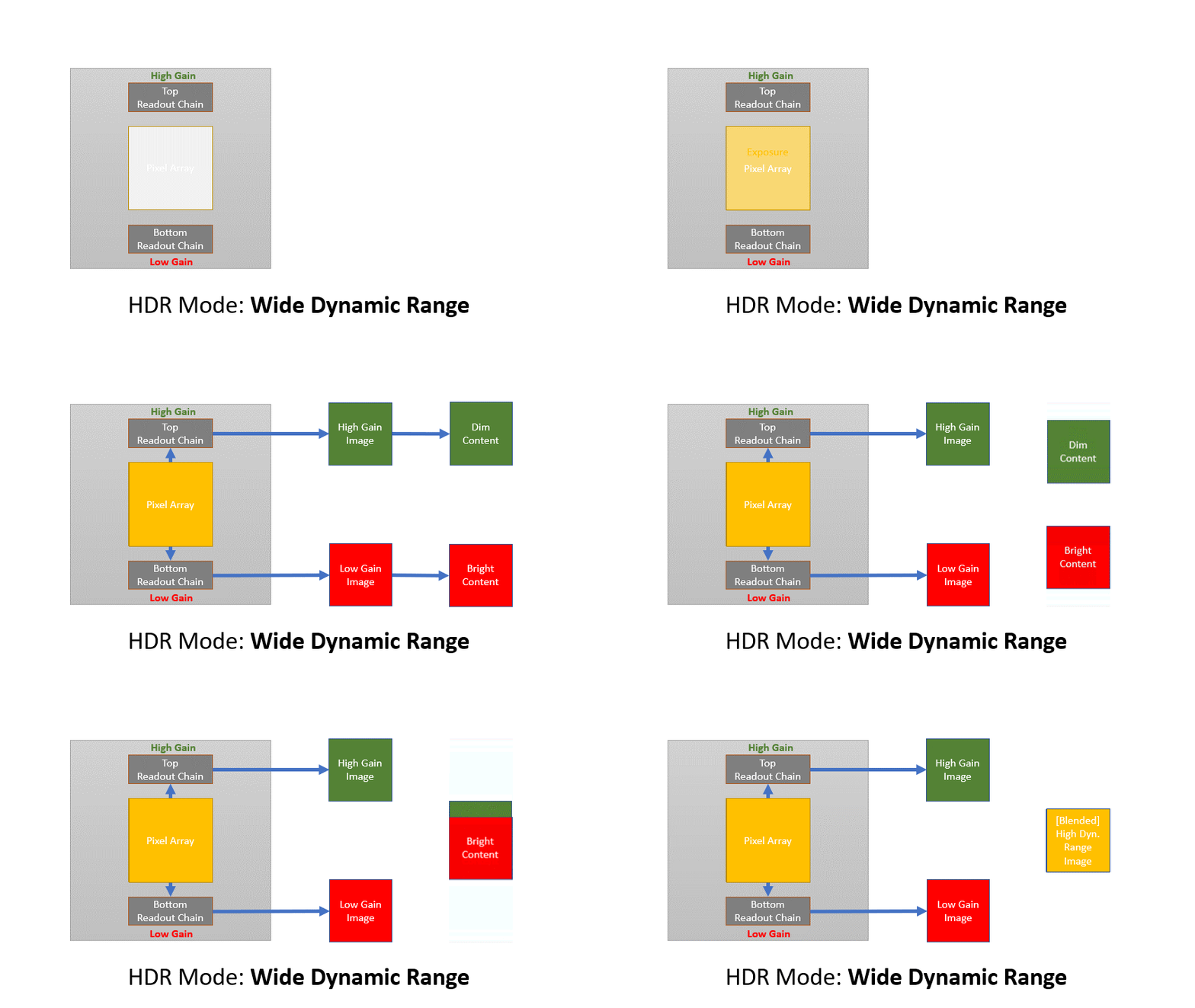
In the low light mode, the top and bottom datapaths are both set to high gain, which means that both A/D converters on the image sensor digitize low intensity pixel values, optimized for low read noise. The signal within each pixel is simultaneously digitized by the two A/D converters and added – a technique that is referred to as correlated multi sampling (CMS). This causes a reduction of the read noise, the trade-off being that the usable intra-scene dynamic range of the sensor is reduced in comparison with that achievable in the HDR mode. This is usually not a concern under low light conditions. Note: sampling theory estimates a noise reduction by a Sqrt(2) factor, see datasheet (see page 2).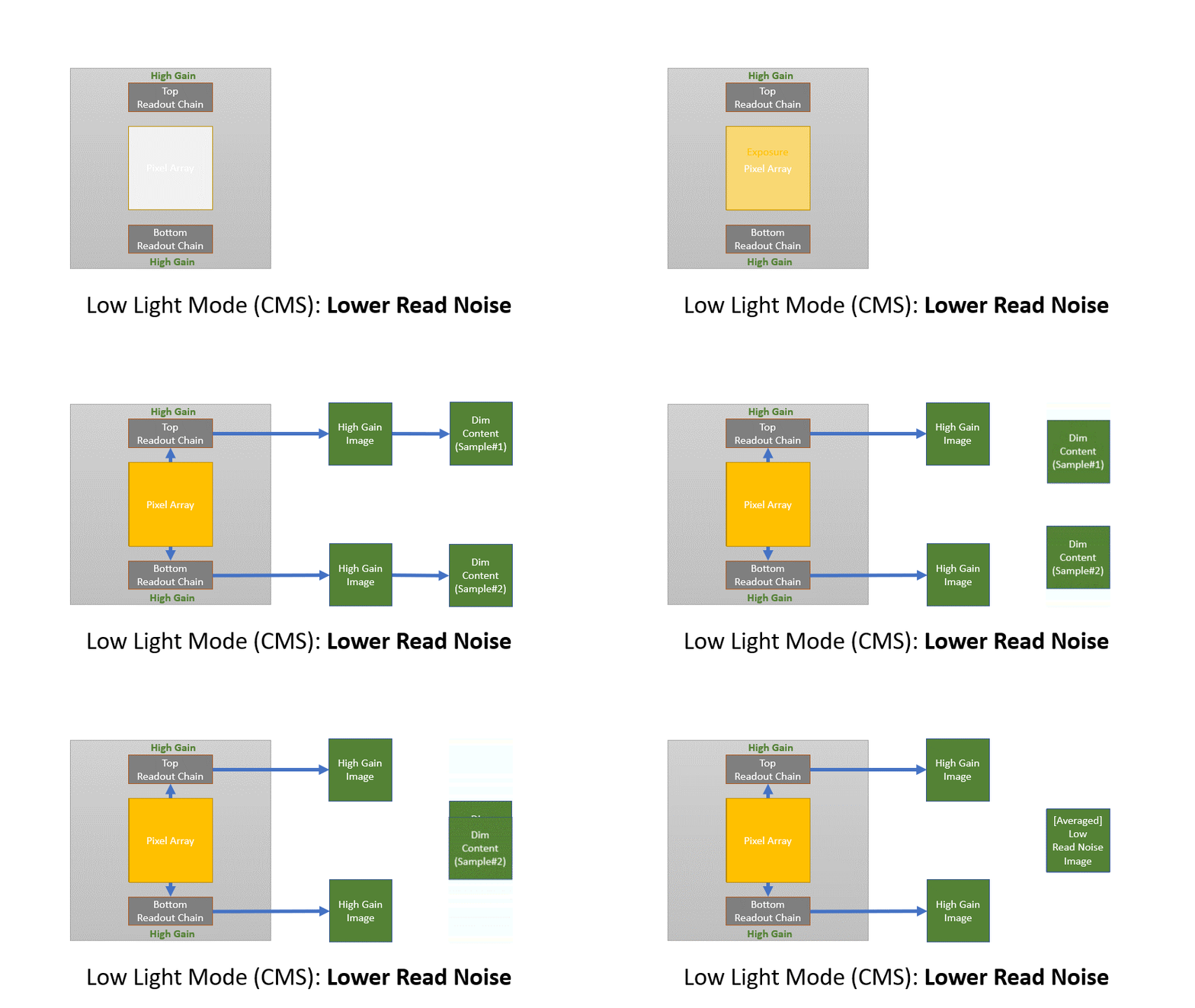
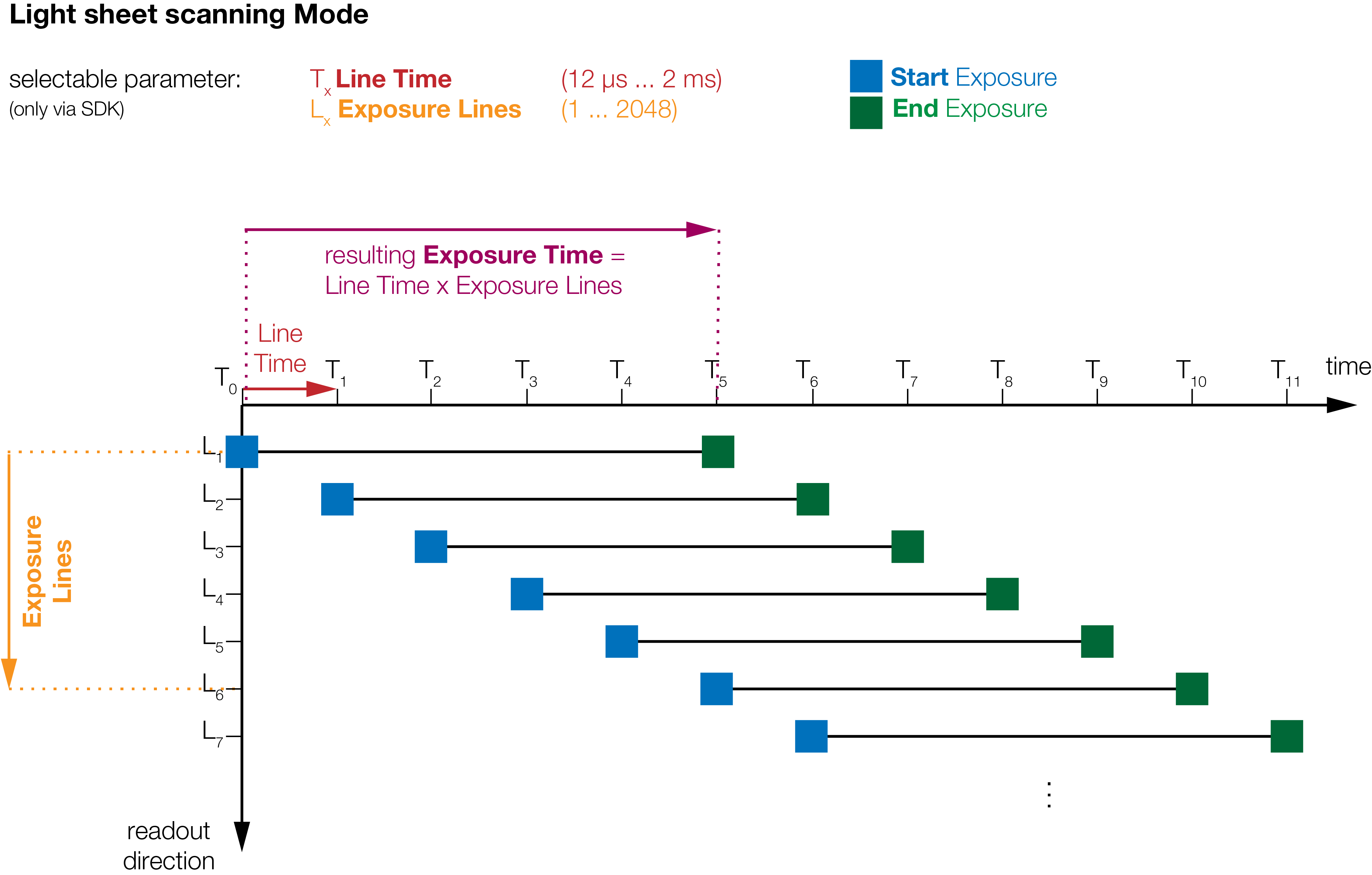
This camera series also supports a lightsheet scanning mode which leverages the rolling shutter readout of the sCMOS imager, in which the readout direction of the sensor is from top to bottom. The standard line time value is 12 μs and it can be set from this camera specific line time up to 2 ms. Compared to the standard operation mode, the lightsheet scanning mode enables the selection of the parameters “Line Time” and “Exposure Lines”. This guarantees an optimized synchronization to an existing lightsheet microscope setup which has no selectable speed or timing. It is possible to set a delay prior to the exposure start.
Host Interface: USB 3.1
Spectral Options:
- Monochrome (standard): 370 – 1100nm
- UV-enhanced: 190 – 1100nm
- Extreme UV (EUV) and soft X-ray: 1 nm to 1100 nm (1.2 keV to 1.1 eV)